“We go forwards”
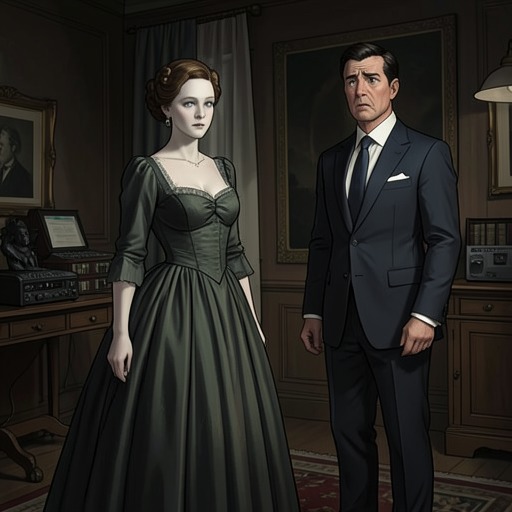
Impure Blood“We go forwards” is Agnès Dantier’s declaration of forward motion under confinement, and a reminder to Vincent Dantier that she chose her own life and work. In the manacled pair’s exchange, the phrase does not promise an easy escape; it marks a deliberate shift from regret to practical thought.
Meaning in Captivity
After acknowledging that their restraints cannot usefully be broken, Agnès insists that they are not beaten and tells her father she is certain they will get out. Her confidence is not a claim that she has found a way to free them: she has examined the chain and wrist restraint and recognized that struggling against the manacles would waste their energy. The phrase thus joins hope to a clear assessment of their immediate limits.
The surrounding circumstances sharpen its meaning. Agnès jokes about the nightgowns they have been made to wear and reassures Vincent that things could be worse; he responds with a small laugh. Their exchange sustains intimacy and morale without disguising their captivity. “We go forwards” continues that balance: optimism is presented as something they choose to maintain, not as evidence that danger has passed.
Correcting Vincent’s Regret
Vincent says he should never have let Agnès join the Brigade, treating her police career as a consequence for which he bears responsibility. Agnès rejects that account directly: he did not let her join; she joined. She calls it the best move she ever made, placing ownership of the decision—and its value—with herself rather than her father.
Her appeal to move forward also answers Vincent’s backward-looking regret. The reminder, “Forwards, Papa, remember?” makes the phrase something shared between them, while her account preserves her independence within their father–daughter bond. She does not deny the danger that has brought them together in captivity; she refuses to let Vincent’s guilt define her choice or their next response.
From Resolve to Practical Thought
Agnès follows the phrase with a concrete proposal: they should think about who might have taken them, because that knowledge could help later. When Vincent asks how, she begins to draw him into a familiar maxim by prompting him with, “What did you always say? ‘Knowledge is…?’” The movement of the exchange is significant: resolve leads not to a promise of immediate escape, but to a search for information and a possible advantage.
The expression therefore works as both reassurance and method. Agnès’s certainty that they will get out coexists with her recognition that their manacles cannot be overcome by force; she redirects their remaining energy toward thought. The repeated forward-looking language turns a shared phrase into a practical orientation, carrying them from Vincent’s regret toward the question of what they can learn.